Jodel D140
The "Musketeer" planes that crisscross the Valley are monuments of our French light aviation.
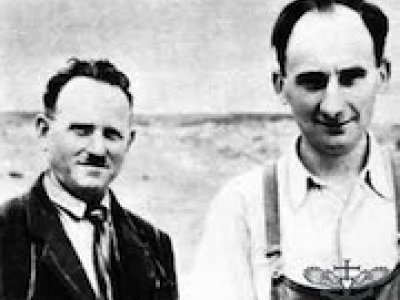
The Jodel aircraft company, whose name is formed from the first syllables of the surnames of its two founders, Édouard Joly and Jean Delemontez, has been based in Beaune since 1946. This firm breathed new life into French light aviation after the war by designing small aircraft that enjoyed considerable success. Many of these were assembled under license by other companies in Europe. In France, the Société Aéronautique Normande (SAN), founded in 1948, undertook the production of aircraft designed by Jodel under the name SAN Jodel.
Starting with the Jodel D.9 Bébé, a tandem two-seater, SAN developed a new four-seater version designated Jodel D.140, the prototype of which took to the air on July 4, 1958. Following the first flight of the production D.140A, the aircraft was nicknamed Mousquetaire (Musketeer). In its original configuration, the D.140 was a conventional low-wing monoplane, constructed of wood and fabric. It was powered by a 134 kW Lycoming four-cylinder horizontally opposed engine, and its rudimentary landing gear was fixed with a tailwheel. The D.140 was also capable of performing medical evacuation missions, as a stretcher could be loaded through the baggage compartment door.
SAN experienced strong demand for the D.140A, particularly after the French government equipped its Light and Sport Aviation Service with it. Production spanned several years, and numerous variants were developed. Among them were the D.140B Mousquetaire II and the D.140C Mousquetaire IIIC, with swept tail fins. Many D.140As received these new tail fins and were subsequently redesignated D.140AC. The French Air Force acquired eighteen D.140E Mousquetaire IVs for the Air Force Academy at Salon-de-Provence; this version featured new control surfaces and one-piece horizontal stabilizers. Finally, the Air Force also ordered fifteen D.140R Abeilles for glider towing. This aircraft has a spacious 4/5-seat cabin with upward-opening doors. A large cargo hold is integrated into the upper fuselage dome, accessible via a wide door located on the left side of the aircraft (on the right on the first prototype). This clearly demonstrates the "travel" focus of this new aircraft, confirmed by its 180 hp Lycoming engine. The first prototype, registered F-BIZE, took off on July 8, 1958, piloted by Lucien Querey. It was the precursor to a series of 195 aircraft, produced from 1958 to 1966. Even today, dedicated enthusiasts continue to build this model.
The Mousquetaire was used as a tug by the French Air Force. In late 1964, a Colonel asked Delemontez to design an aircraft better suited to this specific use. Thus, in 1965, the D140R Abeille derivative was born. Its main characteristics were the lowering of the rear dome (and the elimination of the corresponding cargo bay), and the adoption of a 360° panoramic canopy. The Abeille, of which only 22 were produced, was also highly prized for mountain flying, thanks to its climb rate and panoramic visibility.
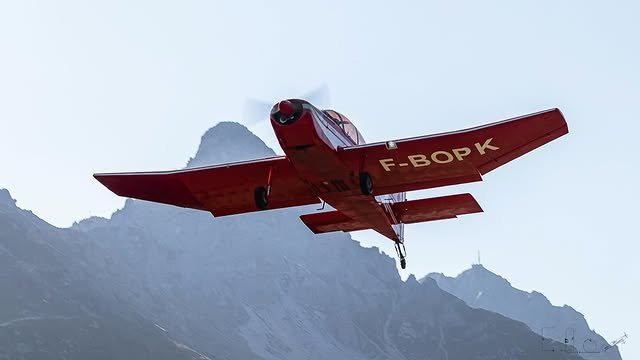
It was around this time that the Méribel flying club, presided over by Jean-François Chappel, ordered a Jodel D140R Abeille: the F-BOPK was delivered to the club in 1968 and has remained at its Savoyard base ever since: it still flies in Méribel!
Specifications
| Type | four-seat light aircraft |
| Engine | Lycoming O-360-A2A |
| Power | 134 kW (180 hp) |
| Maximum speed at sea level | 255 km/h |
| Economic cruise speed at 2,700 m | 200 km/h |
| Initial rate of climb | 230 m/min |
| Service ceiling | 5,000 m |
| Range with maximum fuel | 1,400 km |
| Empty weight | 620 kg |
| Maximum takeoff weight | 1,200 kg |
| Wingspan | 10.27 m |
| Length | 7.82 m |
| Height | 2.05 m |
| Wing area | 18.50 m² |